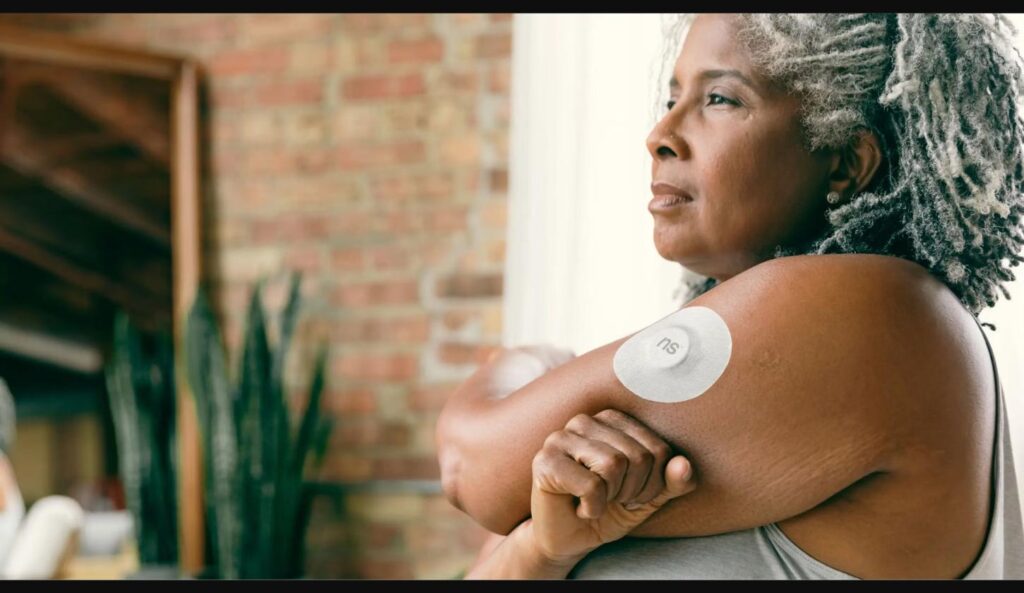
Not diabetic, not pre-diabetic, just curious about how their body actually works, more and more healthy adults are showing up to brunch, the gym, or the office with a small white sensor stuck to the back of an arm. That little patch is a continuous glucose monitor, and it has quietly become one of the most talked about wellness gadgets of 2026.
What a Continuous Glucose Monitor Actually Does
A continuous glucose monitor, or CGM, is a small sensor worn on the arm or abdomen that tracks glucose levels through a thin filament just under the skin. Instead of pricking a finger for a single snapshot, it sends readings to a phone app every few minutes, all day and night. Originally designed for people with diabetes, these devices give a rolling picture of how the body responds to food, stress, sleep, and exercise rather than one isolated number.
Why Healthy People Are Suddenly Wearing Them
Over the last couple of years, CGMs have moved from hospital supply closets into gym bags and office drawers. Several consumer focused companies now sell over the counter sensors bundled with an app that turns glucose data into food scores, workout suggestions, and sleep insights. The pitch is simple: if you can see how a bagel or a stressful meeting affects your blood sugar, you can make small adjustments before those patterns turn into bigger problems down the road.
What People Typically Notice
Most first-time CGM users report the same pattern: the changes are subtle rather than dramatic. Glucose tends to barely move after a short walk following lunch, but it can climb more noticeably on days when breakfast is skipped and a large meal follows later. Coffee on an empty stomach can nudge levels up slightly too. None of this is life-changing information on its own, but seeing it on a graph tends to make people pay closer attention to their eating rhythm in a way a scale or calorie app never did.
Where the Science Holds Up
Research on glucose variability in non-diabetic adults is still developing, and most large studies have focused on people who already have diabetes or prediabetes. What is fairly well established is that big glucose swings, over time, are linked to inflammation and cardiovascular risk. Where the evidence gets thinner is the idea that everyone benefits from micromanaging every spike. A glucose rise after a meal is a normal, healthy response, not automatically a red flag. Researchers who study metabolic health tend to agree that a CGM is a useful mirror, but not a diagnostic tool for people without an underlying condition.
What a Normal Glucose Curve Looks Like
One of the more reassuring facts to understand is that glucose is supposed to move. A typical curve rises after eating, peaks within an hour or so, and gradually returns to baseline within two to three hours. Sensor apps often flag this as a spike, which can make a completely normal response feel alarming. The more useful signal is not the peak itself, it is how quickly things settle back down and how stable the baseline stays overnight.
Who Should Actually Consider One
CGMs seem to offer the most value for people managing prediabetes, insulin resistance, or a strong family history of type 2 diabetes, as well as athletes fine-tuning fueling around workouts. For someone with no metabolic risk factors who already eats reasonably well, a few weeks with a sensor can still be a useful educational experiment, but it does not need to become a permanent fixture on your arm.
The Cost Nobody Mentions in the Ads
Between the sensors, the required app subscription, and in some cases a virtual consultation, a two-week trial usually runs somewhere between sixty and two hundred dollars, and ongoing use adds up quickly since sensors need replacing every couple of weeks. That is worth weighing against the fact that many of the same insights, eating slowly, walking after meals, prioritizing protein and fiber, are available for free.
Getting Started Without Overthinking It
If you are curious, a short trial is a low-risk way to learn your own patterns. Most over-the-counter CGM programs include the sensor, an app, and a brief consultation. It is worth setting a specific goal, such as understanding how breakfast choices affect your energy, rather than trying to optimize every single reading. And it is always worth checking with a doctor first, especially if you have any existing health conditions.
Frequently Asked Questions
Do you need a prescription for a CGM if you do not have diabetes?
In the United States, some over-the-counter CGMs are now available without a prescription, while others still require one through a telehealth consultation built into the purchase process.
How long do the sensors last?
Most consumer sensors are worn for about fourteen days before being replaced, though this varies by brand.
Can a CGM diagnose diabetes?
No. A CGM shows patterns over time, but diagnosing diabetes or prediabetes still requires standard blood tests ordered by a doctor.
The Bottom Line
Continuous glucose monitors are a genuinely interesting window into how your body handles daily life, and that is exactly why they have become one of 2026’s defining wellness trends. Just remember that a good night’s sleep, a short walk after dinner, and a balanced plate did all of this before any sensor came along, they just did not come with a graph attached.
Sources
About the Author
This article was written by Muhammad Adil, founder of The Health Writes. Muhammad is not a medical professional. He researches each topic using publicly available guidance from agencies like the CDC, FDA, and NIH, and cites sources above so you can verify the information yourself. Learn more on our About Us page.
Medical Disclaimer: This article is for informational purposes only and is not intended as medical advice. It should not be used to diagnose, treat, cure, or prevent any disease or health condition. Always consult a licensed physician or qualified healthcare provider before starting any new supplement, dietary practice, or wellness routine, especially if you have an existing medical condition, are pregnant or nursing, or are taking prescription medications.