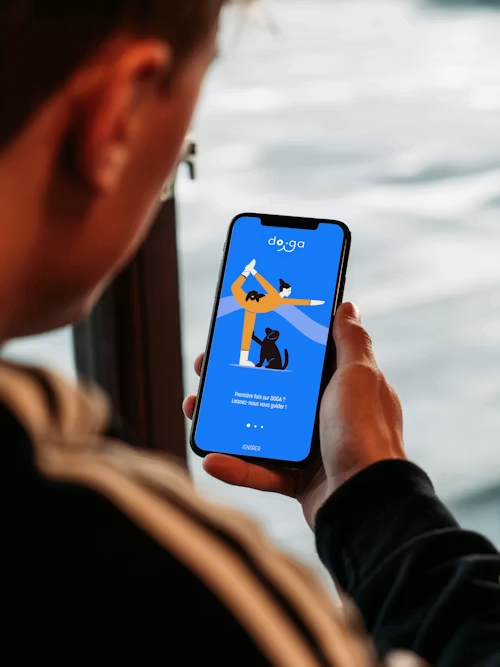
Mental health is no longer a topic people whisper about — in 2026, it’s front and center. With 1 in 5 Americans reporting they’ve used a mental health app in the past year, the market has exploded with options ranging from completely free to over $280 per month. But which apps actually work, and is it worth paying for therapy through an app?
This guide breaks down the best mental health apps available in the USA in 2026, compares free vs. paid options, and gives you a clear picture of real therapy costs — so you can make the right decision for your mental health and your wallet.
Why Mental Health Apps Have Taken Off in 2026
A combination of rising therapy waitlists, cost barriers, and smartphone convenience has pushed millions of Americans toward mental health apps. According to recent data, the average wait time to see a therapist in the US is now 25 days — and for many, that’s simply too long. Apps offer immediate access, often within minutes.
That said, not all mental health apps are created equal. Some are backed by licensed therapists and evidence-based techniques like Cognitive Behavioral Therapy (CBT). Others are little more than mood trackers dressed up with motivational quotes. Knowing the difference could genuinely impact your wellbeing.
Free Mental Health Apps USA 2026: Best Options
1. Wysa — Best Free AI Therapy App
Wysa is an AI-powered chatbot that uses CBT, mindfulness, and dialectical behavior therapy (DBT) techniques. The free version gives you access to self-help tools and 24/7 AI conversations. It’s one of the most clinically validated free options available in the US right now.
- Cost: Free (Pro plan from $29.99/month)
- Best for: Anxiety, stress, mild depression
- Available on: iOS & Android
2. Woebot — Free CBT-Based Mental Health Support
Developed by Stanford-trained psychologists, Woebot uses conversational CBT to help users challenge negative thought patterns. The app is entirely free and has strong research backing. It’s particularly effective for users dealing with anxiety and depression who aren’t yet ready for formal therapy.
- Cost: Free
- Best for: Mild to moderate anxiety and depression
- Available on: iOS & Android
3. Headspace — Best Free Meditation App
Headspace remains the gold standard for meditation and mindfulness in 2026. While its full library requires a subscription, the free tier includes foundational meditation courses and sleep content — more than enough to get started on reducing stress and anxiety.
- Cost: Free basic / $69.99 per year for full access
- Best for: Stress, sleep issues, general mindfulness
- Available on: iOS & Android
4. Calm — Free Tier Available
Calm competes closely with Headspace and offers a generous free tier with guided breathing exercises, sleep stories, and basic meditations. The premium plan unlocks thousands of hours of content, but even the free version is useful for daily stress management.
- Cost: Free basic / $69.99 per year
- Best for: Sleep, relaxation, stress relief
- Available on: iOS & Android
5. Daylio — Free Mood Tracking App
Daylio is a micro-diary and mood tracker that requires no writing at all — just icons. It’s a simple but powerful tool for identifying emotional patterns over time. Therapists often recommend it as a between-session journaling tool.
- Cost: Free (Premium from $2.99/month)
- Best for: Mood tracking, journaling, self-awareness
- Available on: iOS & Android
Paid Mental Health & Therapy Apps USA 2026
BetterHelp — Most Popular Online Therapy Platform
BetterHelp is the largest online therapy platform in the United States, connecting users with licensed therapists via text, voice, and video. In 2026, BetterHelp costs between $240 and $360 per month depending on location, demand, and therapist availability — with most users paying around $280/month.
That price includes unlimited messaging with your therapist and one live session per week. While it’s significantly cheaper than traditional in-person therapy (which averages $150–$200 per session in the US), it’s still a substantial monthly commitment.
- Cost: $240–$360/month (approx. $280 average)
- Best for: Ongoing therapy, anxiety, depression, relationship issues
- Therapist type: Licensed counselors, psychologists, social workers
- Insurance: Not typically covered
Talkspace — BetterHelp’s Biggest Rival
Talkspace is BetterHelp’s closest competitor and offers one key advantage: it works with many major insurance providers, including some Medicaid plans. This makes it significantly more accessible for Americans who have health coverage.
Without insurance, Talkspace plans start around $276/month for messaging-only therapy. With insurance, your out-of-pocket cost could be as low as $0–$30 per session.
- Cost: $276–$396/month without insurance
- Best for: Users with insurance coverage, couples therapy, psychiatry
- Therapist type: Licensed therapists + psychiatrists
- Insurance: Accepts many major plans
Cerebral — Best for Medication Management
Cerebral specializes in combining therapy with medication management — particularly for ADHD, anxiety, and depression. If you’re looking for a psychiatrist who can prescribe medication as well as offer therapy sessions, Cerebral is one of the few apps that provides this. Plans start at around $99/month for care counseling only.
- Cost: From $99/month
- Best for: ADHD, anxiety, depression with medication needs
- Therapist type: Therapists + prescribing clinicians
- Insurance: Accepts some plans
Brightside — Best for Depression & Anxiety
Brightside is a subscription-based platform focused specifically on anxiety and depression treatment. It uses an outcomes-based approach, measuring your symptom severity every few weeks and adjusting your care accordingly. Plans include therapy only, medication only, or both combined.
- Cost: From $95/month (medication) to $349/month (therapy + medication)
- Best for: Moderate to severe anxiety and depression
- Insurance: Accepts major insurance plans
BetterHelp vs Talkspace: Which Is Better in 2026?
This is one of the most searched comparisons in the mental health app space. Here’s a quick breakdown:
| Feature | BetterHelp | Talkspace |
|---|---|---|
| Monthly Cost | $240–$360 | $276–$396 |
| Insurance Accepted | No | Yes |
| Therapist Types | Counselors, psychologists | Therapists, psychiatrists |
| Couples Therapy | Yes (extra cost) | Yes (included in some plans) |
| Psychiatry / Medication | No | Yes |
| App Quality | Excellent | Very Good |
Verdict: If you have health insurance, Talkspace is often the better financial choice. If you don’t have insurance and want the most established platform with the widest therapist selection, BetterHelp is hard to beat.
Free vs Paid Mental Health Apps: What’s the Real Difference?
The biggest distinction isn’t just cost — it’s the level of clinical support you receive. Here’s how they compare:
Free Apps Are Great For:
- Mild stress, anxiety, or mood fluctuations
- Building daily mental wellness habits (meditation, journaling)
- Supplementing existing therapy
- Those on tight budgets who need accessible support
Paid Therapy Apps Are Better For:
- Moderate to severe mental health conditions
- Getting matched with a licensed, accredited therapist
- Ongoing structured treatment and accountability
- Medication management (where available)
The bottom line: Free apps are a valuable first step, but they are not a replacement for clinical therapy. If you’re experiencing persistent symptoms of depression, anxiety disorders, trauma, or other diagnosable conditions, a paid platform with licensed therapists is a much safer and more effective choice.
How Much Does Online Therapy Cost in the USA in 2026?
Therapy costs vary widely depending on your state, the type of provider, and whether you use insurance. Here’s a general overview of what Americans are paying in 2026:
- In-person therapy: $100–$250 per session (national average ~$175)
- BetterHelp: ~$280/month (approximately $70/session at 4 sessions/month)
- Talkspace: $276–$396/month without insurance; potentially $0–$30/session with insurance
- Cerebral: From $99/month
- Free apps (AI-based CBT): $0
- Community mental health centers: Sliding scale, sometimes free
If cost is a major barrier, don’t overlook free resources like the SAMHSA National Helpline (1-800-662-4357) or Open Path Collective, which connects people to therapists at reduced rates of $30–$80 per session.
Mental Health Apps to Avoid in 2026
Not every app on the market deserves your trust. Here are some red flags to watch for:
- No licensed therapist involvement: Apps that rely entirely on AI for clinical-level concerns should be approached with caution.
- Misleading pricing: Some apps advertise low prices but lock most features behind aggressive paywalls after a free trial.
- No privacy policy clarity: Mental health data is extremely sensitive. If an app doesn’t clearly explain how it uses and protects your data, avoid it.
- No clinical evidence: Look for apps backed by peer-reviewed research, not just marketing claims.
Which Mental Health App Is Right for You?
Choosing the right app comes down to three factors: the severity of your needs, your budget, and your preferred style of support.
- If you’re dealing with everyday stress: Start with a free app like Headspace, Wysa, or Woebot.
- If you want professional therapy but can’t afford in-person rates: BetterHelp or Talkspace are your best bets.
- If you have insurance: Check if Talkspace or Brightside are covered — you could save hundreds per month.
- If you need medication: Look at Cerebral or Brightside, which include prescribing clinicians.
- If you’re in crisis: Please call or text 988 (Suicide and Crisis Lifeline) immediately. No app replaces emergency mental health support.
Final Verdict: Best Mental Health Apps USA 2026
The mental health app landscape in 2026 offers something for everyone — from free AI-powered support tools to full-service licensed therapy platforms. Here are our top picks:
- Best free app overall: Wysa
- Best free CBT app: Woebot
- Best paid therapy platform: BetterHelp (no insurance) / Talkspace (with insurance)
- Best for medication + therapy: Cerebral or Brightside
- Best for meditation: Headspace
Whatever your budget or situation, taking steps toward your mental health is always the right move. Use this guide to find the option that works for you — and remember, even free apps can make a meaningful difference when used consistently.
Disclaimer: This article is for informational purposes only and does not constitute medical advice. If you are experiencing a mental health crisis, please contact the 988 Suicide and Crisis Lifeline by calling or texting 988.
Sources
Medical Disclaimer: This article is for informational purposes only and is not intended as medical advice. It should not be used to diagnose, treat, cure, or prevent any disease or health condition. Always consult a licensed physician or qualified healthcare provider before starting any new supplement, dietary practice, or wellness routine, especially if you have an existing medical condition, are pregnant or nursing, or are taking prescription medications.