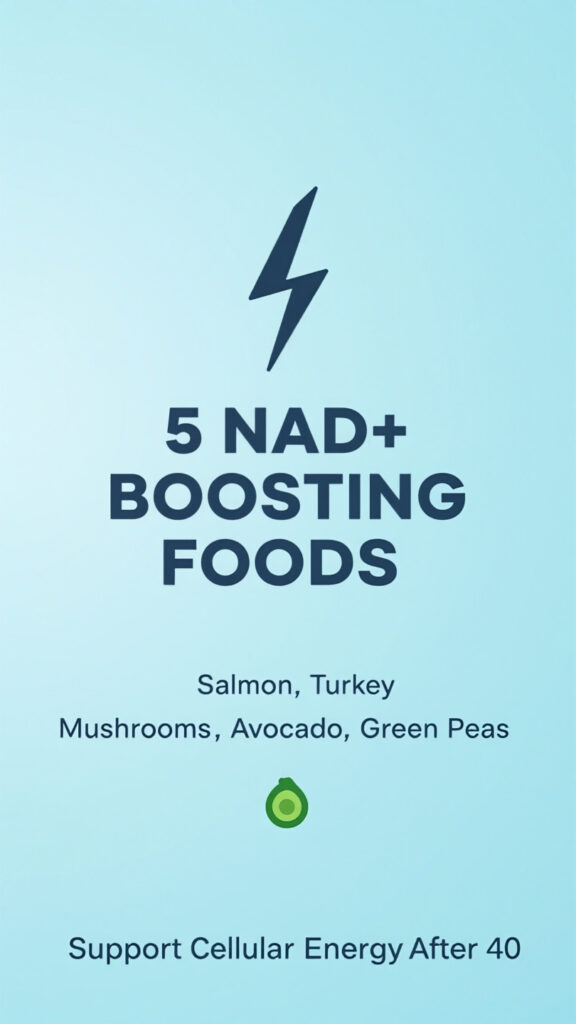
If you’re a woman over 40 dealing with low energy, your NAD+ levels may be part of the picture. NAD+ (nicotinamide adenine dinucleotide) is a coenzyme found in every cell, where it helps power mitochondria, support metabolism, and assist in DNA repair. Research cited by the National Institute on Aging shows NAD+ levels can decline significantly with age, which is one reason energy and recovery often feel different after 40.
Why NAD+ Boosting Foods Matter After 40
Lower NAD+ availability has been linked to reduced cellular energy production and slower recovery over time. While supplements like NMN and NR get a lot of attention, whole foods rich in niacin (vitamin B3) and other NAD+ precursors are an accessible, food-first way to support your body’s natural NAD+ production without pills.
7 Best NAD+ Boosting Foods After 40 for Cellular Energy

1. Salmon
Salmon is a rich source of vitamin B3 (niacin), a direct precursor your body uses to make NAD+. It’s also quick to cook, widely available, and provides omega-3 fatty acids that support skin and heart health alongside its energy-related benefits.
2. Avocado
Avocado contains niacin along with healthy monounsaturated fats. It requires no cooking, works well as a filling snack between meals, and is a heart-healthy addition to a NAD+-supportive diet.
3. Mushrooms
Mushrooms, especially crimini varieties, are a good source of B3. They’re inexpensive, easy to add to almost any meal, and are often highlighted by nutrition experts as a useful food for supporting healthy aging.
4. Peanuts
Peanuts combine niacin with protein, which helps keep you full while supporting NAD+ production. They’re an easy, portable snack for work or travel and also contribute to overall brain health.
5. Green Peas
Green peas provide vitamin B3 along with fiber that supports gut health, which is increasingly linked to broader metabolic and cellular health. Frozen peas retain their nutrients well, making them an easy, budget-friendly staple to keep on hand.
6. Tuna
Canned light tuna is one of the most concentrated food sources of niacin available, delivering a large share of the daily value in a single serving. It’s also shelf-stable and cheap, which makes it an easy way to support NAD+ production on weeks when fresh cooking isn’t realistic. Pair it with whole-grain crackers or a salad for a balanced, protein-forward lunch.
7. Sunflower Seeds
Sunflower seeds provide niacin along with vitamin E and healthy fats, making them a convenient snack for supporting cellular energy between meals. A small handful sprinkled on oatmeal, yogurt, or a salad adds crunch along with the nutrients that support NAD+ production.
Final Thoughts on NAD+ Boosting Foods After 40
Age-related NAD+ decline is a normal part of getting older, but a diet that includes niacin-rich foods like salmon, mushrooms, avocado, peanuts, green peas, tuna, and sunflower seeds can help support your body’s natural energy production. Pairing these foods with consistent sleep, regular movement, and stress management tends to make the biggest overall difference in how you feel day to day.
Frequently Asked Questions
Can food alone raise NAD+ levels as effectively as supplements? Whole foods provide niacin and other precursors your body uses in its natural NAD+ production pathway, but the increase tends to be more gradual than what’s reported with concentrated NMN or NR supplements. For many women, food-first changes are a reasonable starting point before considering a supplement, and combining both is a personal decision to make with your doctor.
How much niacin do I need daily? The National Institutes of Health lists the recommended dietary allowance for niacin at around 14 mg per day for adult women. Most of the foods on this list provide a meaningful share of that amount in a single serving, so eating a few of them regularly across the week can add up quickly.
Are there signs of low NAD+ to watch for? There’s no simple at-home test for NAD+ specifically, but persistent fatigue, slower workout recovery, and brain fog are commonly discussed alongside age-related decline. These symptoms have many possible causes, so it’s worth mentioning them to your doctor rather than assuming NAD+ is the explanation.
Related reading: Check out our guide on the best supplements for women over 40, and our menopause belly fat guide for additional support.
This article is for informational purposes only and does not constitute medical advice. Always consult a qualified healthcare professional before making significant changes to your diet or supplement routine.
Sources
About the Author
This article was written by Muhammad Adil, founder of The Health Writes. Muhammad is not a medical professional. Before publishing, he researches each topic using publicly available guidance from agencies like the CDC, FDA, and NIH, along with peer-reviewed studies, and cites sources above so you can verify the information yourself, then reviews each piece for accuracy before it goes live. Learn more on our About Us page, or reach out through our Contact page if you spot an error.
Medical Disclaimer: This article is for informational purposes only and is not intended as medical advice. It should not be used to diagnose, treat, cure, or prevent any disease or health condition. Always consult a licensed physician or qualified healthcare provider before starting any new supplement, dietary practice, or wellness routine, especially if you have an existing medical condition, are pregnant or nursing, or are taking prescription medications.
Pingback: ai-powered-health-monitoring-after-40