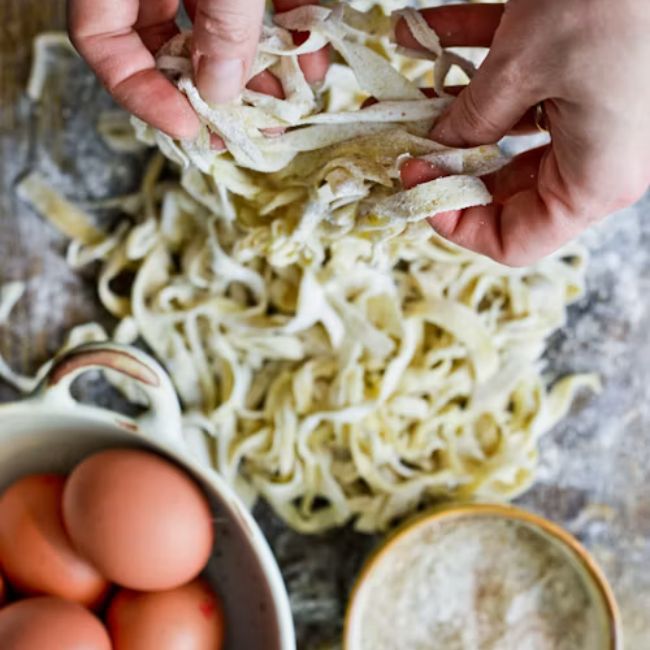
Pasta at Home is easier than many people think. You do not need to be a professional chef, own an expensive pasta machine, or have years of cooking experience. With a few basic ingredients, some patience, and practice, you can succeed.
Additionally, homemade pasta has a soft texture, rich flavor, and freshness that makes every meal feel more special. When you finish, you can tailor shapes and sauces to your liking. The process teaches patience and lets you control ingredients. Plus, it saves money and reduces takeout.
The basic ingredients for homemade pasta are simple: flour, eggs, and a little salt. Some recipes may also require a few drops of water if the dough feels too dry. Once you learn the basic process, you can experiment with different pasta shapes, sauces, and flavors. Whether you want to make spaghetti, fettuccine, or ravioli, learning how to make pasta at home is a useful and enjoyable cooking skill.
Ingredients for Pasta at Home
For a simple batch of fresh pasta, you will need:
- 2 cups of all-purpose flour
- 3 large eggs
- A small pinch of salt
- A few drops of water, if necessary
- Extra flour for dusting
You will also need a clean work surface, a fork, a rolling pin, a sharp knife, and a large pot for cooking. A pasta machine can make rolling the dough easier, but it is not necessary. A regular rolling pin works perfectly well, especially when you are making pasta at home for the first time.
Step 1: Prepare the Pasta Dough
Start by placing the flour on a clean kitchen counter or inside a large mixing bowl. Make a small hole in the center of the flour. This is often called a well. Crack the eggs into the middle of the well and add a small pinch of salt.
Using a fork, gently beat the eggs while slowly bringing flour from the edges into the center. Continue mixing until the eggs and flour begin to form a rough dough. Once the mixture becomes too thick to stir with a fork, use your hands to bring everything together.
At first, the dough may look dry, uneven, or slightly crumbly. Do not worry because this is normal. Keep pressing and folding the ingredients together. If the dough feels too dry and refuses to form a ball, add only a few drops of water. If it becomes very sticky, sprinkle a small amount of flour onto the surface.
Step 2: Knead the Dough
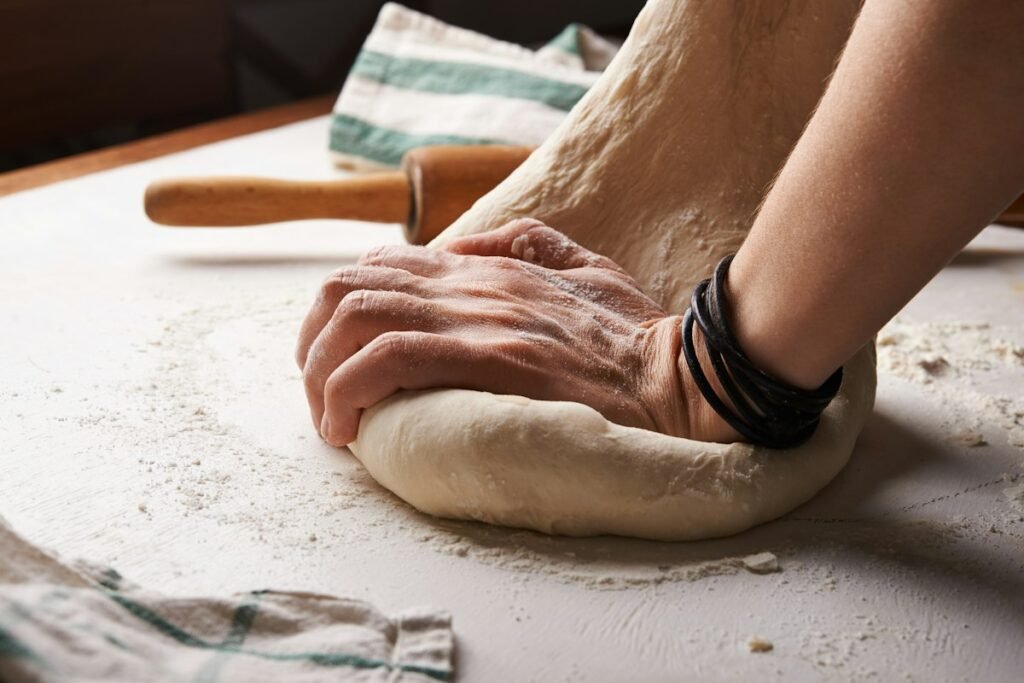
Once the dough comes together, place it on a lightly floured surface. Kneading is an important step because it helps develop the structure of the dough and gives your homemade pasta a smooth texture.
Push the dough away from you with the heel of your hand, fold it back over itself, turn it slightly, and repeat. Continue kneading for about 8 to 10 minutes. The dough should gradually become smoother and more elastic.
Try not to add too much flour while kneading. Pasta dough should be firm, but it should not be dry or hard. When the surface becomes smooth and the dough feels flexible, shape it into a ball.
Step 3: Let the Pasta Dough Rest
After kneading, cover the dough with plastic wrap or place a clean bowl over it. Let it rest for approximately 30 minutes.
Resting the dough is important because it makes the pasta easier to roll. If you try rolling the dough immediately after kneading, it may keep shrinking or springing back. After resting, the dough becomes more relaxed and easier to shape.
While waiting, you can prepare your pasta sauce, chop vegetables, grate cheese, or clean your work area. This makes the cooking process easier once your fresh pasta is ready.
Step 4: Roll Out the Pasta
After the dough has rested, divide it into smaller pieces. Working with smaller portions makes rolling much easier. Keep the pieces you are not currently using covered so they do not dry out.
Place one piece of dough on a lightly floured surface and begin rolling it with a rolling pin. Start from the center and roll outward. Turn the dough occasionally to help keep the thickness even.
Continue rolling until the dough becomes thin. The exact thickness depends on the type of pasta you want to make. Thin sheets are ideal for delicate noodles, while slightly thicker dough works well for wider pasta or filled dishes such as ravioli.
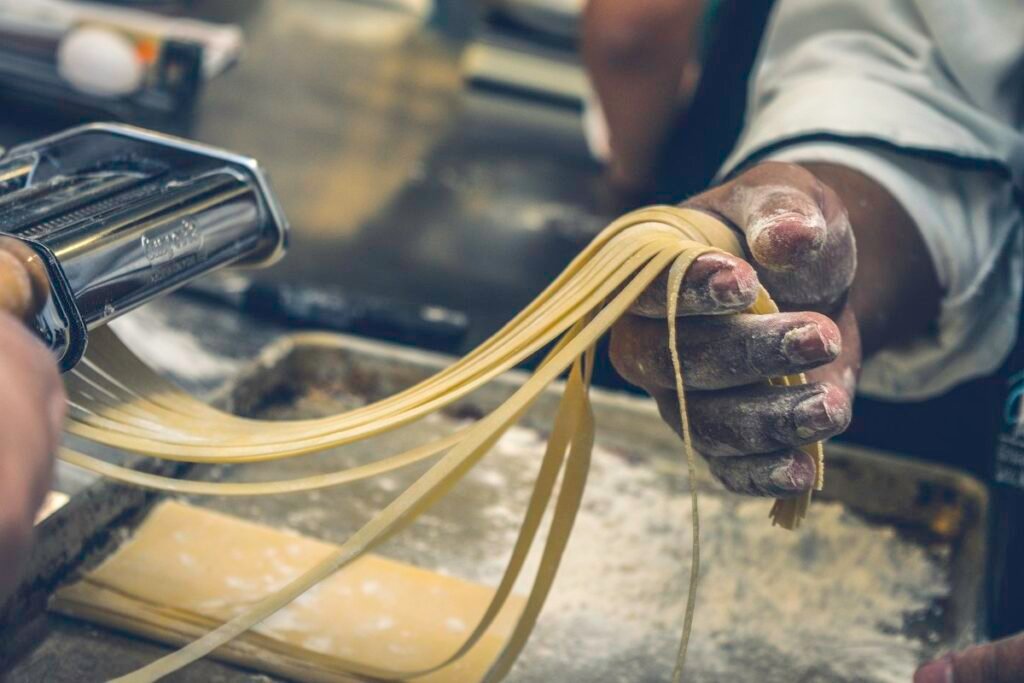
If you own a pasta machine, you can use it instead of a rolling pin. Start with a thicker setting and gradually move toward thinner settings. Do not rush the process, as rolling the dough gradually helps prevent tearing.
Step 5: Cut the Pasta into Shapes
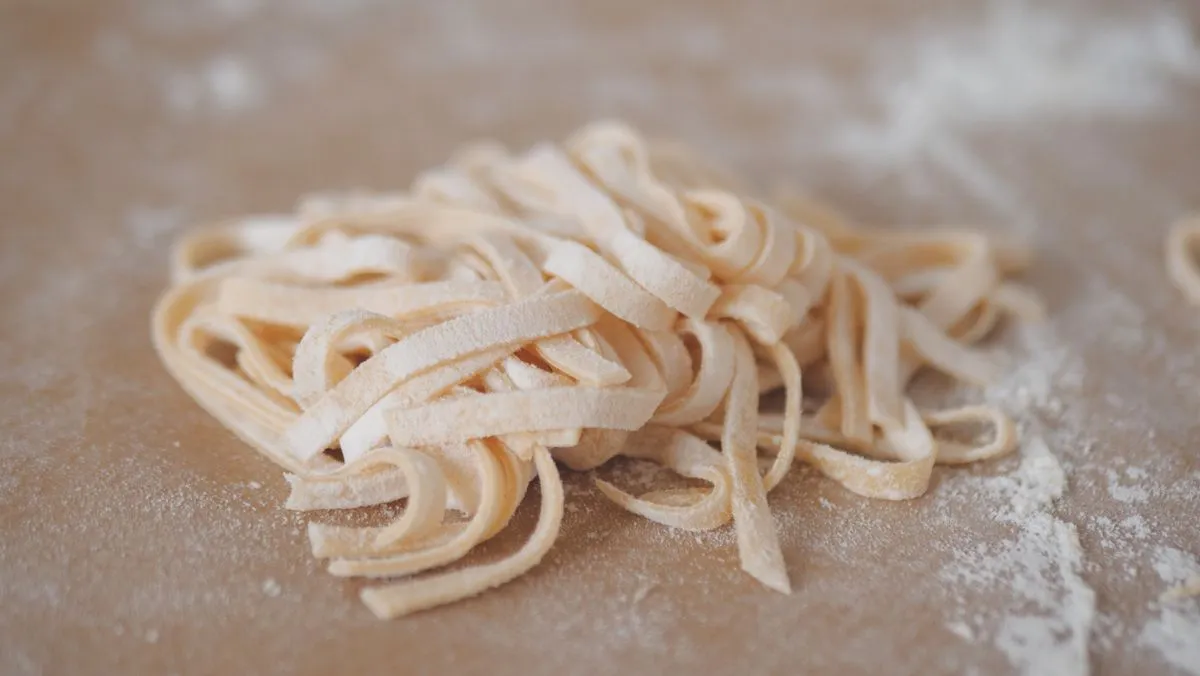
Once you have a thin sheet of dough, you can cut it into your favorite pasta shape. One of the easiest options for beginners is making long ribbons.
For spaghetti-style pasta, cut the dough into thin strips. For fettuccine, make the strips wider. If you prefer wide, rustic noodles, you can create larger ribbons similar to pappardelle.
Lightly sprinkle the cut pasta with flour to prevent the pieces from sticking together. You can gently separate the noodles and place them on a floured tray or clean surface while you prepare the cooking water.
As you gain more experience, you can try making other shapes. Homemade ravioli, for example, can be made by placing a filling between two thin sheets of pasta and sealing the edges. The possibilities become almost endless once you understand the basic dough.
Step 6: Cook the Fresh Pasta
Fill a large pot with plenty of water and bring it to a boil. Add salt to the boiling water before adding your fresh pasta.
One of the biggest differences between fresh and dried pasta is cooking time. Fresh homemade pasta cooks very quickly, usually in about 2 to 4 minutes, depending on its thickness. Add the pasta carefully and stir gently to prevent it from sticking together.
Start checking the pasta after a couple of minutes. It should be tender but still have a slight firmness when you bite it. Avoid overcooking because fresh pasta can become too soft very quickly.
Before draining the pasta, you can save a small amount of the cooking water. The starchy water can be added to your sauce to help create a smoother texture and allow the sauce to coat the pasta more effectively.
Step 7: Add Your Favorite Sauce and Serve
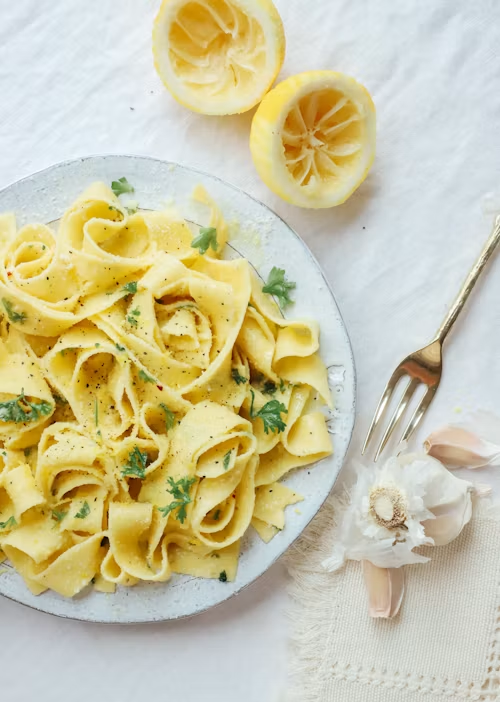
Fresh homemade pasta tastes great with many different sauces. A simple tomato sauce is always a popular choice, but you can also serve it with pesto, cream sauce, garlic and olive oil, vegetables, cheese, or meat.
For the best results, mix the freshly cooked pasta with the sauce immediately. This allows the pasta to absorb some of the flavor and helps the sauce stick to the noodles.
You can finish your dish with grated Parmesan cheese, fresh basil, black pepper, or a small drizzle of olive oil. Sometimes the simplest ingredients create the most delicious meal.
Tips for Making the Best Homemade Pasta
Making pasta becomes easier with practice. Here are a few useful tips to help you get better results:
- Do not add too much flour, as this can make the pasta dry and tough.
- Knead the dough well until it becomes smooth and elastic.
- Always let the dough rest before rolling it.
- Keep unused dough covered so it does not dry out.
- Roll the pasta evenly to help it cook at the same speed.
- Cook fresh pasta quickly and check it often.
- Mix the pasta with the sauce immediately for better flavor.
Remember that your first batch does not need to look perfect. Homemade pasta is meant to have a handmade character. Uneven noodles can still taste amazing, and every attempt will help you improve your technique.
FAQs About Making Pasta at Home
1. What ingredients do I need to make pasta at home?
You need flour, eggs, and a small amount of salt. A few drops of water may also be needed if the dough is too dry.
2. Can I make homemade pasta without a pasta machine?
Yes. You can use a regular rolling pin to flatten the dough and a sharp knife to cut it into noodles.
3. How long should I knead pasta dough?
Knead the dough for approximately 8 to 10 minutes, or until it becomes smooth and elastic.
4. How long does fresh homemade pasta take to cook?
Fresh pasta usually cooks much faster than dried pasta and often takes around 2 to 4 minutes, depending on its thickness.
5. Can I freeze homemade pasta?
Yes. You can freeze uncooked homemade pasta and cook it later directly from the freezer.